
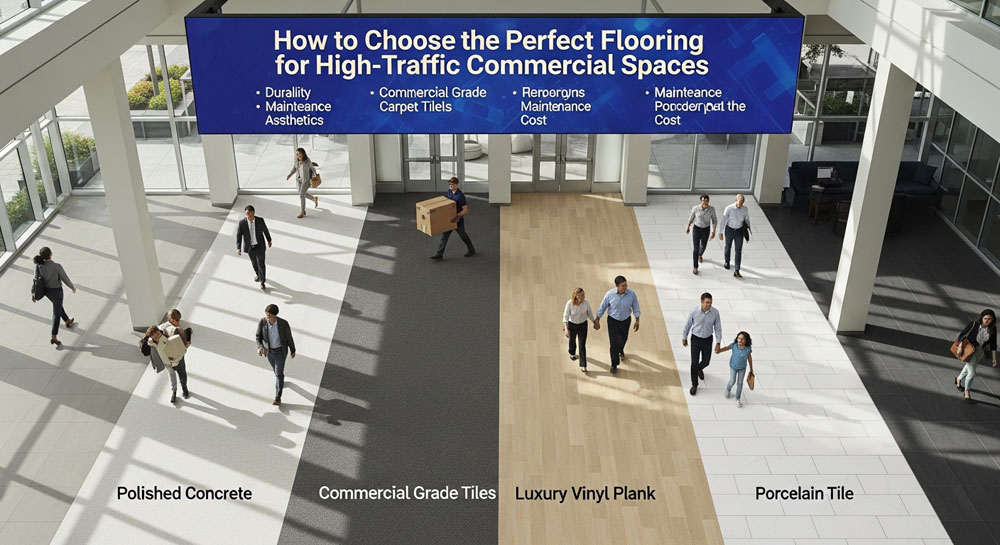
Choosing the right flooring for high-traffic commercial spaces is a critical decision that can impact the aesthetics, functionality, and durability of a business environment. High-traffic areas, such as retail stores, offices, restaurants, hospitals, airports, and hotels, experience a lot of foot traffic on a daily basis. As a result, the flooring in these areas must withstand the pressure of constant use, resist wear and tear, and look great over time. Whether you’re updating an existing space or designing a new one, understanding the factors that contribute to choosing the perfect flooring is key.
In this comprehensive guide, we’ll explore the various factors that influence the decision-making process, from durability and maintenance to design aesthetics and budget considerations. Additionally, we will discuss a variety of flooring options that are well-suited to high-traffic commercial spaces, including vinyl, carpet tiles, hardwood, and even outdoor tiles for spaces that may extend into exterior areas.
Key Factors to Consider When Choosing Flooring for High-Traffic Commercial Spaces
1. Durability
The most important factor in selecting flooring for high-traffic commercial spaces is its durability. Floors in such spaces must be able to withstand a lot of foot traffic without showing signs of damage quickly. Durability depends on the material used, how it’s constructed, and how well it can handle the constant wear and tear of heavy foot traffic, dropped items, rolling carts, and spills.
Some materials are more resilient than others. For instance, ceramic tiles, concrete, and certain types of vinyl and linoleum are known for their exceptional durability. They can handle high-impact activities without chipping, cracking, or fading quickly.
2. Maintenance and Cleaning Requirements
Another important factor to consider is the maintenance and cleaning requirements of the flooring material. High-traffic areas can quickly accumulate dirt, dust, and debris, and the floor will need to be cleaned frequently to maintain a polished and professional appearance.
Some flooring options require minimal maintenance, while others may need regular polishing, sealing, or deep cleaning. For example, hardwood floors may need to be refinished every few years to restore their appearance, while tiles and vinyl can typically be cleaned easily with a mop or vacuum.
In high-traffic areas like healthcare facilities or restaurants, cleanliness is of utmost importance to ensure that hygiene standards are maintained. Floors that are easy to clean and resistant to stains will be better suited for these environments.
3. Comfort and Safety
Comfort is another essential consideration when selecting flooring for commercial spaces. Employees and customers may spend a lot of time on their feet in high-traffic areas. If the floor is hard, slippery, or uncomfortable to walk on, it can lead to fatigue and even injuries over time.
To improve comfort, some businesses choose flooring materials that have a bit of cushion or softness, such as carpet tiles or rubber flooring. These materials can provide additional support and reduce strain on the feet and legs. If safety is a priority, slip-resistant flooring materials, such as textured vinyl or rubber, should be considered to prevent accidents in wet or high-traffic areas.
4. Aesthetic Appeal
The aesthetic appeal of your flooring is also crucial, as it will influence the overall ambiance and brand image of your business. The design and color of the floor can complement the decor, create an inviting atmosphere, and leave a lasting impression on visitors and customers.
You’ll want to select a flooring material that aligns with the look and feel you want to create for your commercial space. For example, a high-end restaurant might opt for polished wood floors or luxury vinyl planks, while a retail store might choose something bold, like patterned tiles or contemporary carpeting, to match the store’s branding.
Flooring materials also come in a range of finishes, from matte to glossy, which can affect the lighting and appearance of a room. A shiny finish can make a space feel brighter and more open, while matte finishes tend to provide a more subdued, sophisticated look.
5. Budget and Cost-Effectiveness
The cost of the flooring materials and installation can vary significantly based on the type of material chosen. It’s important to factor in both the initial cost of purchasing and installing the flooring, as well as the long-term maintenance and replacement costs.
In a high-traffic commercial environment, opting for inexpensive materials might lead to higher maintenance costs over time due to wear and tear. Therefore, it’s essential to strike a balance between affordability and durability. While some high-end flooring materials might have a higher upfront cost, they may prove to be more cost-effective in the long run because they will last longer and require fewer repairs or replacements.
6. Environmental Impact
Many businesses today are looking for sustainable flooring options that contribute to reducing their environmental footprint. Sustainable flooring materials are made from renewable resources, have minimal impact on the environment during their production, and can be recycled or repurposed at the end of their lifecycle.
Bamboo, cork, and reclaimed wood are some examples of sustainable flooring materials that are both durable and eco-friendly. Additionally, some vinyl and rubber flooring options are made from recycled materials and can be fully recycled at the end of their use.
7. Noise Reduction
In commercial spaces where noise levels can be high, such as offices, open-plan workplaces, and retail spaces, noise reduction is an important factor to consider. Some flooring materials absorb sound better than others, helping to reduce noise and create a more pleasant environment for employees and customers alike.
Carpet tiles, rubber flooring, and cork are particularly good at absorbing sound and reducing noise transmission. If noise is a concern, consider flooring options that can help mitigate the noise level in your commercial space.
Popular Flooring Options for High-Traffic Commercial Spaces
1. Vinyl Flooring
Vinyl flooring is one of the most popular options for high-traffic commercial spaces because it offers a combination of durability, ease of maintenance, and aesthetic variety. Vinyl is available in many styles and finishes, including planks, tiles, and sheets, which can mimic the look of more expensive materials like hardwood, stone, and ceramic.
Vinyl flooring is resistant to scratches, stains, and moisture, making it ideal for areas that see a lot of foot traffic. It’s also comfortable underfoot and easy to clean, making it an excellent choice for commercial spaces such as retail stores, healthcare facilities, and offices.
2. Carpet Tiles
Carpet tiles are another excellent flooring option for high-traffic commercial spaces. They provide the comfort and warmth of carpet, but with the added benefit of easy replacement. If a section of carpet becomes worn or damaged, individual tiles can be replaced without having to replace the entire floor.
Carpet tiles come in a variety of colors, patterns, and textures, which can help create a unique look for your commercial space. They also offer sound absorption, which can be particularly beneficial in offices and conference rooms. Carpet tiles can be used in many commercial settings, such as offices, hotels, and educational institutions.
3. Outdoor Tiles
In some commercial environments, particularly those with an outdoor or semi-outdoor space, outdoor tiles may be necessary. These tiles are designed to withstand the elements, providing a durable and stylish surface for patios, walkways, or outdoor dining areas. Outdoor tiles are resistant to weather conditions such as rain, UV rays, and extreme temperatures.
In commercial spaces like restaurants, shopping malls with outdoor courtyards, or resorts, outdoor tiles offer both functionality and aesthetic appeal. These tiles are available in a variety of materials, including porcelain, ceramic, and natural stone, and can provide an upscale, durable surface for high-traffic outdoor areas.
4. Hardwood Flooring
For commercial spaces that require a touch of sophistication and warmth, hardwood flooring is a top choice. Hardwood offers a timeless appeal and can enhance the overall aesthetic of the space. It is also highly durable, especially when maintained properly.
While hardwood may require more maintenance than some other options, its elegance and the value it adds to the property make it a good investment in many commercial settings, such as hotels, upscale restaurants, and corporate offices.
5. Rubber Flooring
Rubber flooring is an excellent option for high-traffic commercial spaces where safety and comfort are a priority. It is slip-resistant, cushioning, and noise-absorbent, making it ideal for environments such as gyms, hospitals, and schools.
Rubber flooring is also durable and resistant to stains, odors, and chemicals, which makes it easy to maintain. It comes in a range of colors and styles, including rolls and tiles, so you can customize the look of your commercial space while also benefiting from its practical properties.
6. Ceramic and Porcelain Tiles
Ceramic and porcelain tiles are durable and easy to maintain, making them a popular choice for commercial spaces with high foot traffic. These materials are water-resistant, stain-resistant, and highly durable. They can be used in a variety of commercial settings, such as restaurants, malls, and offices.
These tiles also come in a wide range of designs, allowing you to create a customized look for your space. However, they can be harder on the feet compared to some other flooring options, so they may not be ideal for spaces where people will be standing for long periods.
7. Concrete Flooring
Concrete is a highly durable flooring option that is increasingly being used in modern commercial spaces. It is particularly suitable for industrial-style offices, warehouses, and retail spaces. Concrete can be polished to create a sleek, modern look or stained to add color and texture.
Concrete flooring is low-maintenance, cost-effective, and can last for many years. However, it can be hard and uncomfortable underfoot, so it may need to be supplemented with area rugs or mats for areas where employees or customers will be standing for extended periods.
Conclusion
Choosing the right flooring for high-traffic commercial spaces requires a careful balance of factors, including durability, ease of maintenance, comfort, safety, aesthetic appeal, and budget. Whether you’re outfitting an office, a restaurant, a retail store, or a hospital, selecting the ideal flooring will create a functional, attractive, and durable environment for your employees and customers.
From vinyl and carpet tiles to hardwood and outdoor tiles, there are many options available to meet the specific needs of your business. By considering the unique demands of your space and the benefits of each flooring material, you can make an informed decision that will enhance the longevity and performance of your commercial environment for years to come.