
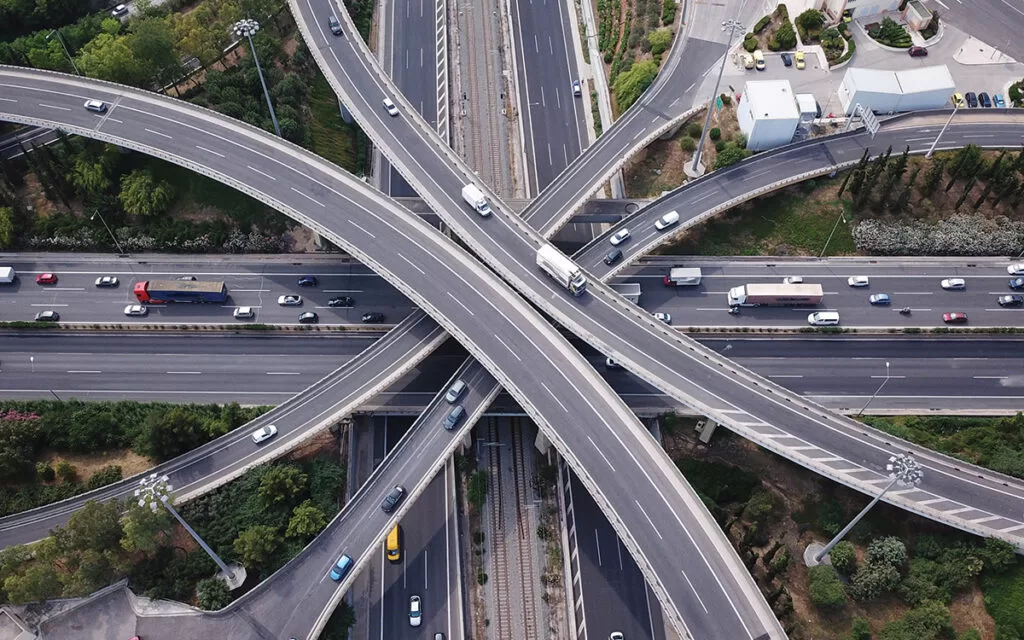
Infrastructure acts as a real estate catalyst but rarely announces itself. It works quietly, reshaping real estate markets, turning them into hotspots. This is the pattern now playing out across India’s Tier-2 cities, and Lucknow has moved furthest along that curve. What makes Lucknow’s case compelling is not just the pace of appreciation but the manner in which it has occurred. No doubt, being UP’s state capital provided it with a distinctive edge but the value has accumulated steadily and infrastructure development had a major role. As connectivity has become more reliable, distances have shrunk, and the city’s functional boundaries have expanded.
Recent data bears this out. A Magicbricks report released in early 2025 recorded a 22.61% year-on-year capital appreciation for Lucknow, the highest among major Tier-2 cities. That number is often quoted, but less attention is paid to what underpins it. Prices have risen not because supply is constrained or because investors are flipping inventory, but because the city itself is easier to live in, move through, and plan around than it was even five years ago.
The Lucknow Outer Ring Road is central to this shift. Stretching roughly 104 kilometres and linking multiple national and state highways, it has altered how traffic, logistics, and development flow around the city. The immediate effect has been decongestion, but the longer-term impact is spatial. Areas that once felt peripheral are now decisively connected, and land that carried little residential logic is being re-rated. Market tracking by property consultants indicates that locations influenced by the ring road have seen price growth approaching 40% over the past two to three years.
Metro connectivity has reinforced that reach. The operational North–South corridor, running through Charbagh, Hazratganj, Alambagh and into Gomti Nagar, has quietly reset commuting assumptions. When daily travel time becomes predictable, residential choices widen. According to a joint Q1 2025 analysis by PropEquity and Magicbricks, homes within close proximity to operational metro stations in Gomti Nagar and Hazratganj are commanding premiums of 15 to 25% over comparable micro-markets without metro access. Rental yields, too, have strengthened.
Road infrastructure within the city has been just as influential. Amar Shaheed Path, once treated largely as a functional bypass, has over time taken on a very different role and has emerged as a lifeline connecting airport with the city. What is notable here is that commercial and residential growth have moved in tandem, suggesting real economic absorption rather than speculative imbalance.
The airport itself has added another layer to this transformation. The expansion and modernisation of Chaudhary Charan Singh International Airport, including the commissioning of a new terminal, has improved regional and domestic connectivity. This has subtly shifted demand patterns around Kanpur Road, Amausi, and parts of Alambagh. Beyond city limits, expressway connectivity has tightened Lucknow’s integration with the wider state economy. The Agra–Lucknow Expressway has already altered travel dynamics, while the upcoming Lucknow–Kanpur corridor under the Awadh Expressway project is expected to do the same.
Transaction data reinforces the narrative. In the first quarter of 2025, residential sales in Lucknow touched approximately Rs. 1,797 crore, marking a 48% year-on-year increase in transaction value, according to PropEquity. Unit sales rose by about 25% in the same period. Average prices hovered around Rs. 6,394 per square foot in 2025, placing Lucknow in a competitive position relative to peripheral markets of several Tier-1 cities.
Lucknow today represents a stage of urban evolution that many Tier-2 cities aspire to but have not yet reached. Infrastructure is no longer an afterthought or a promise; it is embedded in daily life. As a result, real estate appreciation feels less like a bet and more like a consequence. That distinction, though subtle, is what makes the city’s trajectory worth watching.
Authored By: Preksha Singh, CEO of Agrasheel