
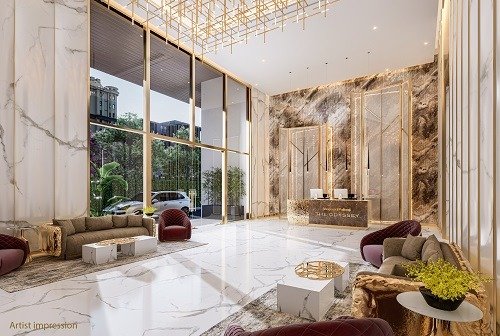
India’s luxury housing market is experiencing a fundamental shift. For decades, premium housing was defined by address and area, a prestigious postcode, a generous floor plate, and a list of amenities that read like a hotel brochure. That calculus has changed. Luxury has moved beyond size and grandeur to focus on thoughtful design, sustainable practices, and personal comfort. Modern day homebuyers are not purchasing square feet. They are buying a lifestyle: exclusivity, privacy, design excellence and a better day-to-day experience.
This evolution is taking place at a time when demand for premium homes continues to be strong. A 2025 CBRE – ASSOCHAM report states that luxury housing sales across India’s top cities grew 85 percent year-on-year in the first half of 2025, driven by rising aspirations among high-net-worth individuals (HNIs), NRIs and wealthy professionals. Homes priced Rs 4 crore and above saw 28 percent year-on-year growth in Q1 2025 with unit sales increasing from around 1,510 to 1,930 across India’s top seven cities. This is not a market chasing volume. It is a market chasing meaning.
The message is clear: luxury real estate is no longer about owning more. It is about accessing something fewer people can.
Entering the Age of Understated Exclusivity
At the centre of this evolution is a concept gaining traction across design and lifestyle circles: quiet luxury. It is the deliberate rejection of ostentation in favour of restraint, craft, and authenticity. Exclusivity is no longer determined solely by price, but by the overall quality of life, privacy, and the emotional value of ownership.
A home that announces itself loudly is increasingly read as insecure. The more compelling proposition is one that reveals itself slowly, through the quality of its materials, the intelligence of its spatial planning, and the thoughtfulness of its detailing. Developers are responding by offering more customization options, letting homeowners tailor layouts, interiors, wellness areas and lifestyle amenities to their tastes. The trend is moving away from cookie-cutter luxury to bespoke living.
Privacy as the Ultimate Luxury
Buyers are moving away from dense, high-rise developments and are instead looking for boutique residences, branded communities and low-density projects that are built on exclusivity. This trend is evident in the growing market for ultra-premium penthouses, private villas and exclusive residential communities. Developers are responding by launching projects with fewer homes, larger floor plates and dedicated private spaces in major markets.
Security too has evolved from the traditional gated community model. Safety is now a part of the design in many of the luxury projects launched recently. Facial recognition systems, biometric access controls, AI-enabled surveillance, app-based visitor management and private lift lobbies are fast becoming standard features rather than premium add-ons. The modern luxury buyer expects technology to offer convenience and discretion without compromising on aesthetics.
Design-Led Living Takes Centre Stage
Modern luxury buyers are far more design-literate than previous generations. They are evaluating properties not only on location but also on architecture, spatial planning, material selection, natural light, ventilation, and the emotional experience a home creates. Clean architecture, natural ventilation, considered materiality, and spatial generosity are no longer differentiators; they are baseline expectations.
Modern homes are characterized by open-plan layouts, earthy palettes, large glass windows and organic materials such as reclaimed timber and stone, which create a seamless transition between the indoors and the outdoors. In coastal markets such as Goa, this has resulted in a renaissance of vernacular design languages, with arched openings, textured facades, high ceilings and shaded verandas that respond intuitively to the climate rather than import aesthetics.
With the spacious living areas, private outdoor spaces and lifestyle that allows for abundant privacy, there has been an uptick in demand for luxury villas. Buyers are also increasingly seeking projects that are reflective of local cultural narratives and architectural authenticity.
The Rise of Experiential Living
Experiential living is now central to buying decisions. Today’s luxury buyers want their investments to enhance their quality of life as well as appreciate. Wellness centres, nature trails, private clubhouses, concierge services, meditation gardens, co-working lounges and curated community experiences are key elements of premium developments.
The home is no longer seen as a separate asset. It’s becoming a platform for wellness, productivity, social connection, and personal fulfillment. As wealth creation accelerates and buyer expectations keep evolving, India’s luxury housing market is moving towards a more mature phase. In future, luxury real estate will not be about the amount of space you own but the exclusivity, privacy, authenticity and experiences that space offers. In this new era, true luxury is not about visibility but about distinction.
A New Definition Taking Hold
What is emerging is a luxury market defined less by what it includes and more by what it refuses: excess, density, noise, and the anxiety of overcrowded living. The buyers driving this segment are globally exposed, design-aware, and clear about what they want. Their expectations are not merely high; they are global. They have lived well elsewhere and now want that standard at home, on their own terms, in spaces that reflect who they are rather than signal what they own.
That is the new definition of luxury real estate in India: not ownership, but authorship.