
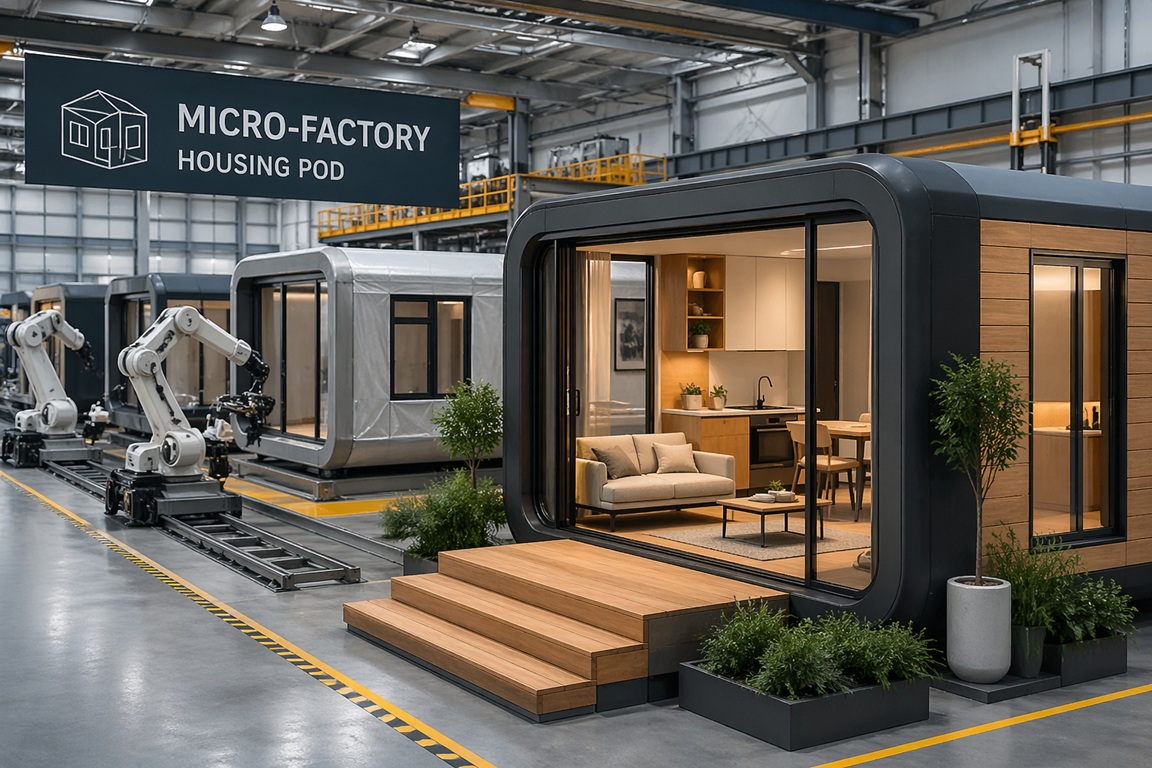
According to latest research by Growth Market Reports, the global Micro-Factory Housing Pod market size reached USD 6.4 billion in 2024, demonstrating robust expansion driven by rapid urbanization and the growing demand for flexible, scalable housing solutions. The market is projected to grow at a CAGR of 12.1% from 2025 to 2033, reaching a forecasted value of USD 18.2 billion by 2033. Key growth factors include increasing investments in modular construction technologies, the rising need for affordable and quickly deployable housing, and supportive government policies aimed at addressing housing shortages.
The Micro-Factory Housing Pod Market is emerging as a transformative segment within the global construction and real estate industry. These compact, factory-built housing units are designed for rapid assembly, scalability, and cost efficiency As cities become denser and land availability declines, micro-factory production systems are reshaping how housing is designed and delivered.
Market Drivers and Growth Catalysts
Rapid Urbanization and Housing Shortage
One of the strongest drivers of the micro-factory housing pod market is accelerating urbanization. Cities worldwide are experiencing unprecedented population inflows, creating pressure on traditional housing infrastructure. Conventional construction methods struggle to meet demand quickly, making prefabricated and modular housing pods a practical alternative.
Cost-Efficient and Scalable Construction
Micro-factory housing pods are manufactured in controlled environments, significantly reducing labor costs, material waste, and construction time. This industrialized approach allows developers to scale production based on demand while maintaining consistent quality standards. As a result, governments and private developers are increasingly adopting this model for affordable housing projects.
Technological Advancements in Manufacturing
Automation and Robotics Integration
Modern micro-factories are leveraging robotics, AI-driven assembly lines, and precision engineering to enhance production efficiency. Automated systems ensure uniformity in housing pod structures while minimizing human error. This technological shift is making mass customization possible, where housing units can be tailored to specific customer requirements without slowing production.
Smart and Sustainable Materials
The industry is also witnessing increased adoption of sustainable materials such as engineered wood, recycled composites, and energy-efficient insulation panels. These innovations not only reduce environmental impact but also improve the durability and energy performance of housing pods. Smart technologies, including IoT-enabled home systems, are further enhancing livability.
Market Challenges
Despite strong growth prospects, the micro-factory housing pod market faces several challenges. Regulatory barriers in different regions can delay adoption, as building codes are often designed for traditional construction methods. Additionally, high initial setup costs for micro-factory infrastructure may limit entry for smaller players. Public perception regarding the durability and aesthetics of modular housing also remains a hurdle in some markets.
Opportunities and Future Potential
Expansion into Disaster Relief and Temporary Housing
Micro-factory housing pods present significant opportunities in disaster relief, refugee accommodation, and temporary workforce housing. Their rapid deployment capability makes them ideal for emergency scenarios where time-sensitive shelter solutions are required.
Smart Cities and Urban Redevelopment
As smart city initiatives expand globally, micro-factory housing systems are expected to play a crucial role in urban redevelopment projects. Their modular nature allows cities to optimize land use efficiently while maintaining modern living standards.
Competitive Landscape
- Haus.me
- Boxabl
- Koto Design
- Nestron
- Mighty Buildings
- ICON
- Blokable
- Cubicco
- Ecocapsule
- MADI Home
Future Outlook
The future of the Micro-Factory Housing Pod Market is closely tied to the global shift toward industrialized construction and sustainable urban planning. As cities continue to grow vertically and horizontally, the demand for fast, efficient, and adaptable housing solutions is expected to intensify. Micro-factory systems are likely to become more deeply integrated into mainstream construction ecosystems, moving beyond niche applications into large-scale urban development.
Source: https://growthmarketreports.com/report/micro-factory-housing-pod-market