
India’s residential market is selling a larger proportion of homes priced above Rs 1 crore, even as overall housing sales remain largely flat. The numbers point to a market where buyers are spending more on homes, but demand is becoming increasingly uneven across cities and price categories.
Knight Frank India’s latest residential market assessment found that homes priced above Rs 1 crore accounted for 55% of sales across eight major cities during the first nine months of 2026, compared with 50% in the same period last year. Sales in the Rs 2-5 crore category rose 19.4% year-on-year to 51,501 units, making it one of the stronger-performing price brackets.
The broader market, however, presents a more measured picture. Residential sales across the eight cities remained almost unchanged at 2,58,238 units during the period. Delhi-NCR recorded an 11% decline in sales, although the Rs 2-5 crore category continued to register growth across major markets, including NCR.
ANAROCK Research’s third-quarter numbers offer another view of the market. Housing sales across the top seven cities increased 3% year-on-year to approximately 1,00,220 units. The growth was not uniform, with Mumbai, Bengaluru and Hyderabad recording increases while Delhi-NCR and some other markets saw a decline.
Taken together, the figures suggest that the premium housing market is gaining weight within residential sales, but the shift is not simply a story of buyers moving towards expensive properties. Location, affordability, the quality of available supply and the expectations attached to a home are all influencing purchase decisions.
What is changing in the premium housing market?
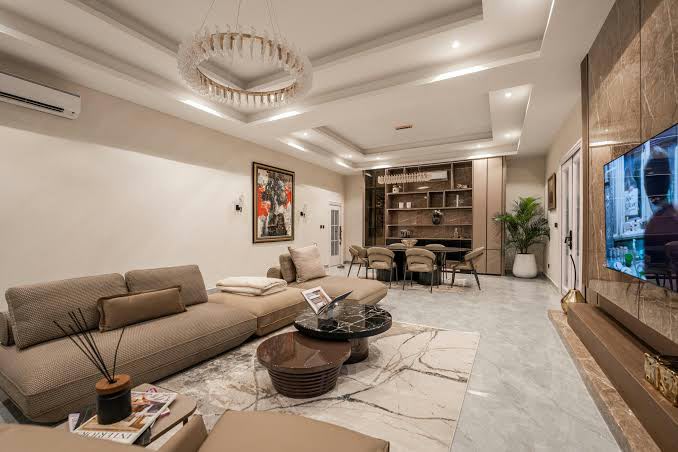
The definition of a premium home is also evolving. Buyers are looking beyond additional floor space or a longer list of amenities. Layout efficiency, privacy, natural light, open areas and the upkeep of common facilities are becoming part of how a residential property is assessed.
For families spending a larger amount on a home, the decision also involves evaluating the developer’s delivery record and the development taking place around the project. A well-designed apartment may attract initial interest, but its long-term appeal is closely linked to connectivity, social infrastructure and the quality of the neighbourhood.
Ashok Singh Jaunapuria, Managing Director and CEO of SS Group, said the change in buyer expectations was influencing the way residential developments were being planned.
“The growing preference for premium housing reflects how homebuyer expectations are evolving. Buyers today are looking beyond the size of a home and placing greater value on space, privacy, thoughtful layouts, construction quality and lifestyle amenities. This is encouraging developers to focus on better-planned residential communities that offer a more complete living experience. Markets such as New Gurugram are well placed to benefit from this demand, supported by a strong base of professionals, entrepreneurs and buyers seeking upgraded living standards.”
In Gurugram, this demand is playing out across established residential locations as well as developing corridors. New Gurugram, the Southern Peripheral Road and Dwarka Expressway have attracted residential investment over the years, with infrastructure improvements and the expansion of commercial and social facilities influencing buyer interest.
However, the growth of these locations will depend on more than new launches. The pace at which infrastructure and everyday services keep up with residential development will be important in determining their long-term appeal.
Ravikant, Founder and CEO of Elegance Enterprises, said affluent buyers continued to show interest in homes that offered quality and exclusivity, but were also paying closer attention to the details of a project.
“Despite changing market conditions and rising property prices, demand for well-designed homes is expected to continue among buyers seeking better living environments. However, buyers are becoming more discerning, carefully assessing developer credentials, project specifications, connectivity and delivery timelines before making a decision,” he said.
The preference for larger homes is also connected to how families use their living spaces. Work-from-home arrangements, changing family requirements and the need for separate areas for work and personal time have made layouts and usable space more important considerations.
Raghunath Reddy Bhattagiri, Co-founder and Managing Director of Triguna Projects, said the requirements of homebuyers had changed beyond the basic need for a larger property.
“Buyers are looking beyond the basic requirements of a house and seeking more space, dedicated work-from-home areas and greater privacy. The experience of recent years has reinforced the importance of homes that can accommodate changing family needs. This is particularly relevant in premium housing, where buyers are investing in a better quality of life,” he said.
The question of affordability remains
The rise in premium housing sales also brings the issue of affordability into focus. While higher-value homes are accounting for a larger share of transactions, the lower price segments have not seen the same momentum. Knight Frank’s data showed that sales of homes priced below Rs 50 lakh fell 14% year-on-year during the first nine months of 2026.
For developers, this creates a market with different sets of expectations. Buyers in the premium segment may be willing to pay more for location, space and amenities, but they are also evaluating whether the price is justified. At the same time, rising property prices make it harder for first-time buyers and middle-income households to enter the market.
The festive season could bring additional enquiries and bookings, particularly as developers introduce new projects and limited-period offers. But the larger test for the sector will be whether demand holds beyond the seasonal buying window.
The latest figures point to a market that is not growing at the same pace everywhere. Premium housing is gaining ground, but buyers are becoming more selective about what they are willing to pay for. For developers, the challenge will be to match that willingness to spend with homes that offer demonstrable value.