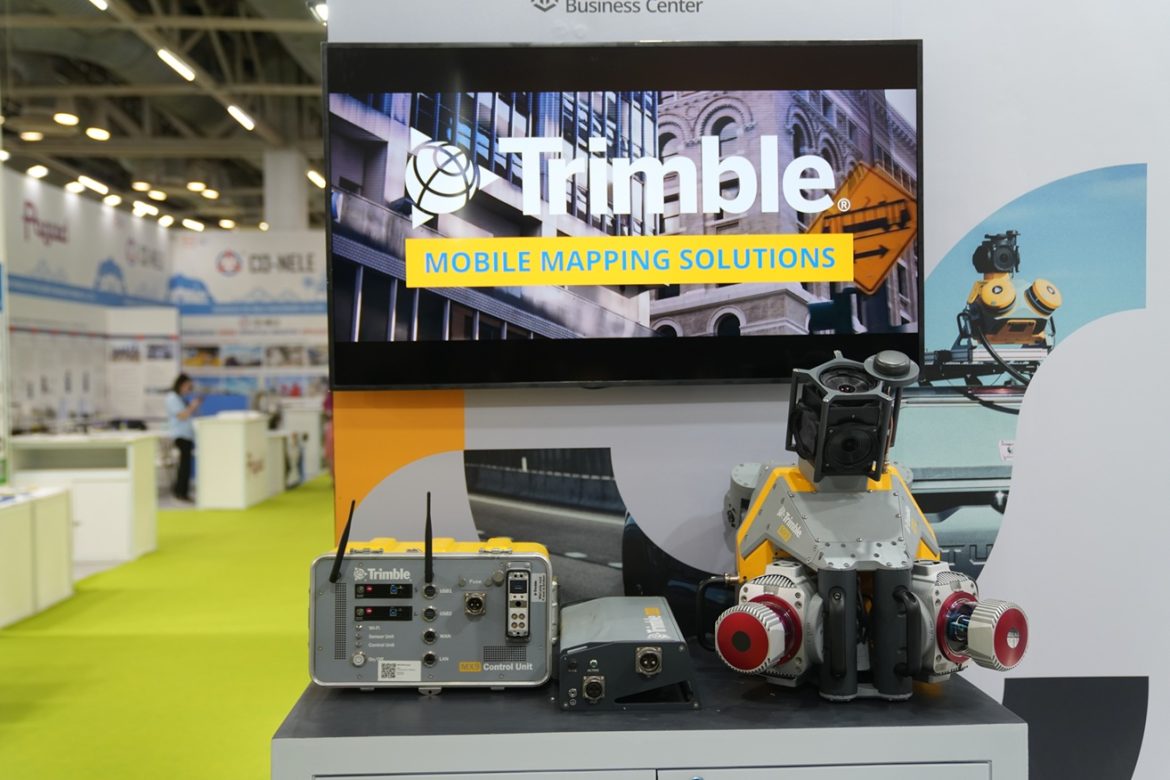
Trimble, a global construction technology company, demonstrated advanced machine control and connected construction technologies at bauma CONEXPO INDIA 2026, held at the India Expo Centre from September 15 to 18. Presenting at the Trimble booth, the authorized distribution partners, Spry Technocon and SITECH India highlighted how Trimble’s design, positioning, machine control and field analytics operate as a unified digital workflow to support construction & infrastructure stakeholders.
At the Trimble booth, sales engineers demonstrated how major highway, road, mining and marine projects across India are being designed, built and managed using Trimble’s Connected Construction ecosystem. These solutions directly address the National Highways Authority of India’s (NHAI) landmark August directive requiring automated and intelligent machine-aided construction (AI-MC) on major highway developments, positioning the authorized Trimble dealers as key technology integration partners for compliance and field execution.
As India accelerates large-scale infrastructure projects, Spry Technocon and SITECH India are enabling contractors, infrastructure developers to move beyond standalone equipment toward connected, AI-native jobsite workflows. By deploying Trimble’s execution layer, the dealers help seamlessly link digital design data from engineering directly into active field equipment, returning real-time data to decision-makers to optimize full project systems.

Commenting on their presence at bauma CONEXPO INDIA 2026, John Whitehead, Vice President of Sales, APAC, Trimble, said, “We are witnessing India undertake infrastructure projects of unprecedented scale and complexity. Keeping pace with this development, technology is evolving from simply controlling individual machines to connecting the entire construction workflow. Trimble’s Connected Construction approach brings together the digital and physical aspects of construction, while our growing engineering and innovation capabilities in India demonstrate our long-term commitment to the market.”
“Trimble’s technologies are being implemented on the ground by Spry Technocon, which brings technical expertise and a field-level understanding of construction challenges to translate Trimble’s ecosystem into real project outcomes. Be it highways, roads, or marine infrastructure, our technical and support teams bring the hands-on experience required to implement the right Trimble solution for each application, ensuring smooth deployment and maximum uptime,” said Vivek Bansal, CEO, Spry Technocon.
Across major highway and road projects, the dealerships have successfully deployed Trimble Grade Control, Paving Solutions, Compaction Solutions and Trimble Earthworks systems delivering 3D digital design data directly to heavy machinery for precise excavation, grading, paving, and compaction.
Trimble’s solutions are currently deployed by its partners across four major road infrastructure projects in India, spanning Madhya Pradesh, Andhra Pradesh, Maharashtra, and Tamil Nadu:
- NH-146B Sandalpur–Nasrullaganj Bypass, Madhya Pradesh
43.2 km | Project value: approx. ₹881 crore - NH-516C Visakhapatnam Port Connectivity, Andhra Pradesh
12.66 km | Project value: approx. ₹554 crore - Nashik Ring Road – Maharashtra
7.02 km | Project value: approx. ₹625 crore - Thatchur–Punnapakkam to Thiruvallur Bypass Greenfield Highway, Tamil Nadu
Six-lane greenfield highway | Major highway infrastructure project
Together, these active project deployments showcase how Trimble technologies are successfully adopted across India’s infrastructure landscape.
A major highlight at the Trimble booth was the AI-MC enabled compaction solution, engineered in India, which Spry Technocon and SITECH India are actively delivering to local contractors and infra stakeholders seeking data-driven, intelligent execution on site.
Supported by Trimble’s Chennai R&D center, a 300,000 sq. ft. facility dedicated to cloud, AI, and analytics capabilities – Spry Technocon and SITECH India offer contractors world-class technology combined with localized service, training, and ongoing technical support.
About Spry Technocon
Spry Technocon provides surveying, positioning and construction technology solutions, helping infrastructure companies improve accuracy, productivity and project execution. It serves construction and infrastructure stakeholders, enabling them to leverage Trimble’s Connected Construction solutions through application expertise and field support.
Survey Equipment Supplier India | Spry Technocon
About SITECH India (NE)
SITECH India (NE) is a Trimble distribution partner providing integrated construction technology solutions, including machine control, site positioning, software, paving, compaction and payload systems. It helps heavy civil contractors improve jobsite productivity, precision and efficiency.
Sitech India (NE) – Advance Construction Technology Solutions
About Trimble
Trimble (NASDAQ: TRMB) is a global technology company transforming how the world builds, moves and works. With more than 45 years of technology expertise, 11,000+ employees and
operations across 40+ countries, Trimble connects the physical and digital worlds through positioning, 3D modelling, machine control, connectivity and data analytics.