
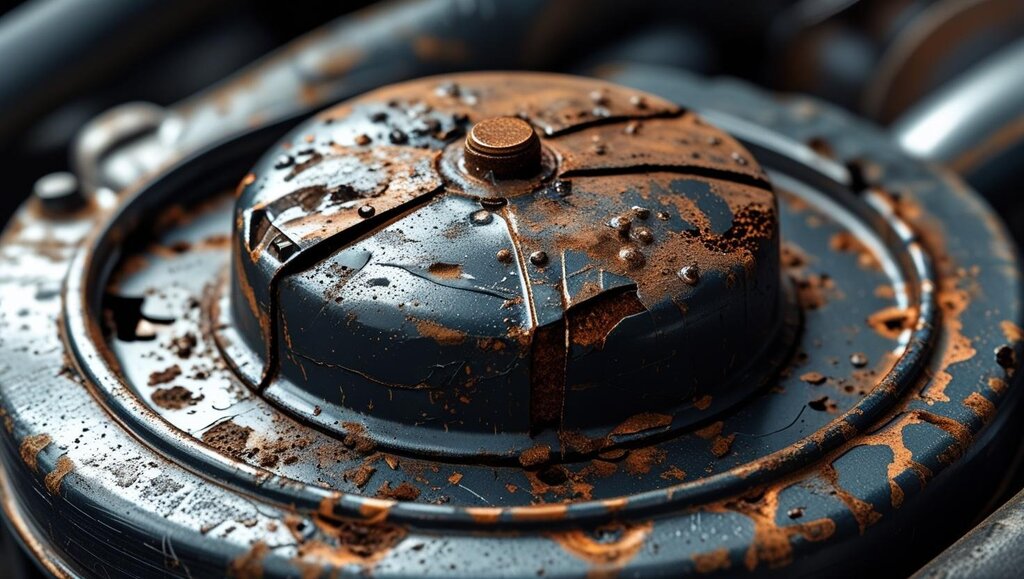
A radiator cap may appear minor, but it is essential for the cooling system in your vehicle. When it fails, it can cause serious problems if not fixed quickly. So what happens if your radiator cap fails? Read on to find out what a radiator cap is, how it works, the 7 common symptoms of a bad radiator cap, and how to identify the problem source. Knowing this information can help you avoid expensive repairs and equipment downtime, keeping your vehicle operating efficiently.
What is the Radiator Cap?
A radiator cap is a small, round component placed on top of the radiator, easily recognized by its pressure release valve. Typically situated at the top, it serves as a pressure valve that controls the cooling system’s pressure. It seals the radiator to prevent coolant loss and maintains the pressure at the correct level, thereby raising the coolant’s boiling point and helping to prevent overheating.
How Does a Radiator Cap Work?
The radiator cap consists of several components, including a pressure spring, vacuum valve, pressure relief valve, and upper and lower rubber seals, all of which must work together for proper operation. The pressure relief valve, along with its rubber seal, is secured by a spring pressing against the cap. When pressure increases, the spring and valve are pushed upward, allowing air and radiator coolant to release to the overflow. When the engine cools, a vacuum forms at the top of the radiator. This causes the lightly loaded return valve and spring to open due to atmospheric pressure, drawing air back through the overflow into the radiator. If there is an expansion tank, only liquid is expelled and reabsorbed through the overflow, ensuring the radiator remains constantly filled with coolant.
7 Signs Tell You a Radiator Cap is Bad
It shows clear signs that tell you your radiator cap is failing. Here are seven key indicators to watch out for. If you notice any of these, your first step should be to inspect the radiator cap.
1. Visible Coolant Leaks or White Stains
This is the most obvious sign. You might see colorful puddles—commonly green, pink, or orange—under your vehicle. A worn seal prevents the cap from maintaining pressure, letting hot coolant leak out. Even without puddles, look for crusty, white streaks on the radiator or cap area—dried coolant residue indicating a leak.
2. Collapsed or Damaged Radiator Hoses
Check the rubber hoses attached to your radiator. If a hose appears flattened or sucked inward, it suggests the cap’s vacuum valve is stuck, blocking air from entering as the system cools. If the cap fails to release excess pressure, hoses can feel hard, swell, or even burst.
3. Engine Overheating
This is a serious warning sign. The cap maintains pressure, raising the coolant’s boiling point. When it fails, pressure drops, causing coolant to boil at lower temperatures. Consequently, your engine temperature gauge rises into the red zone, risking significant engine damage.
4. Overflowing Coolant Reservoir
The plastic overflow tank captures excess coolant when it expands from heat. A good cap only allows coolant into the reservoir when pressure is genuinely high. If the spring is weak, it releases pressure prematurely, leading to coolant spilling into the reservoir and overflows.
5. Steam from Under the Hood
Billowing steam from the engine bay indicates coolant boiling and escaping the system. This occurs if the cap cannot maintain pressure. It’s an urgent sign to pull over and let the engine cool.
6. Air in the Cooling System
A bad cap seal can let air enter the cooling system as it cools, causing air pockets. These disrupt coolant flow, creating hot spots and reducing cooling efficiency. Commonly, you’ll hear gurgling or bubbling sounds from the dashboard area when starting the car.
7. Constantly Low Coolant Level
If you have to refill the coolant reservoir frequently without obvious leaks, it indicates the coolant is slowly escaping as steam through the faulty cap. This gradual loss can lead to overheating if not fixed.
Radiator Cap Checking Methods
Simply finding the signs above isn’t enough to be certain the radiator cap is faulty. A leaking hose or a malfunctioning water pump can cause similar symptoms. To avoid unnecessary part replacements, verify whether the cap itself has failed. Here are the methods to confirm this.
Method 1: Visual and Physical Inspection
This is the easiest check you can do yourself. When the engine is cold, remove the cap and examine it thoroughly in good light.
- Check the Seals: Inspect the large rubber gasket on the bottom and the smaller vacuum seal in the center. Are they cracked, brittle, warped, or covered in grime? Healthy seals should be flexible and intact. If damaged, they can’t hold pressure.
- Check the Springs: Press down on the large spring. It should feel firm and return smoothly. If weak, mushy, or stuck, it’s failing. Repeat for the smaller valve in the center.
- Check the Fit: Place the cap back on the radiator neck. Does it turn on and lock with a secure click? If loose or wobbly after tightening, the cap or radiator neck may be worn.
Method 2: Professional Pressure Test
While a visual inspection is helpful, a cap that looks perfect might still fail to hold the correct pressure. The only definitive test is a pressure test.
Mechanics use a cooling system pressure tester—a hand pump with a pressure gauge that connects to your radiator.
The mechanic pumps the system to the pressure rating marked on your cap and observes the gauge.
If the pressure remains steady, the system and cap are likely OK.
If it drops, there’s a leak. To confirm if it’s the cap, they can test it separately with an adapter. If the cap can’t maintain its rated pressure, it’s the source of the problem. If your cap fails either inspection, it should be replaced.
Once the problem’s origin is confirmed, you need to replace it right away to get your machinery working properly again.
When Should You Replace the Radiator Cap?
It is highly recommended to replace the radiator cap every four to five years as a standard preventative maintenance practice. This is because radiator caps, as critical components of your machinery’s cooling system, naturally degrade and wear out over time. Even without obvious signs of malfunction, their internal springs and seals can weaken, reducing their ability to maintain the proper pressure required for the cooling system to function efficiently. This gradual decline can compromise your entire cooling system, potentially leading to overheating, coolant leaks, and severe damage to vital components like the radiator, hoses, water pump, and the engine itself.
Beyond this routine replacement schedule, several clear warning signs indicate a radiator cap has already failed. If you notice any of these seven key indicators, you should inspect your equipment without delay and replace the wrong parts immediately.
Conclusion
In short, the radiator cap serves as the protector of your entire cooling system. Recognizing seven signs and knowing how to verify the problem with a straightforward check or test allows you to address the underlying issue efficiently. Replacing a defective radiator cap is more than a simple repair. Visit FridayParts.com to search for cheap and reliable radiator caps for routine maintenance and urgent replacement. It’s one of the most affordable and effective ways to protect your engine.