
Just five years back, land outside the city was something most people resisted buying. And those who did buy it, treated it mainly as a retirement plan like an investment tucked away for later and not something to actually use. That equation has changed. More professionals in their thirties and forties are now moving land up the list, treating a plot on the outskirts as part of their portfolio and not a retirement plan. And these professionals are actually making use of their land to unwind, to farm a little, to rewire and to relax. But the question is, what has changed in the last few years?
So, when Covid struck, professionals started working from home and that eventually settled into a hybrid routine. What was supposed to give people back their time with their families and themselves did the opposite. The laptop simply moved from the office to the dining table and the working day and the working week stopped having clear edges. So when the weekend does arrive, most people aren’t looking for another activity to fill it. They just want to get away from screens altogether, to go somewhere that offers space, peace and nature.

That’s a big part of why land outside the city is getting more attention right now. It’s not about owning a farm in the traditional sense. It’s about having a place that’s the opposite of everything a city apartment is like no walls closing in, no traffic outside the window, nothing that needs replying to.
What people actually want from that place is fairly simple. Clean air as traffic has polluted outdoors and AC filtered air is just not natural. Food that’s grown without shortcuts, so you know exactly what’s on your plate instead of guessing. And underneath both of these, something quieter: a bit of real peace of mind, the kind that comes from just being somewhere calm, not from switching your notifications off for two days and calling it a break.
But talking practically, none of this would be possible on a regular basis if the basics hadn’t improved: connectivity, infrastructure and the managed farmland model. Roads and connectivity outside major cities are much improved and purpose-led which means people can commute to the outskirts without getting stuck in traffic, reaching any part of the city in far less time. So a plot that used to feel like a full day’s trip is now just a couple of hours away. Also, the space you get for the same money is bigger too, like a crore in the city gets you a few hundred square feet in a flat; the same crore outside the city gets you acres.
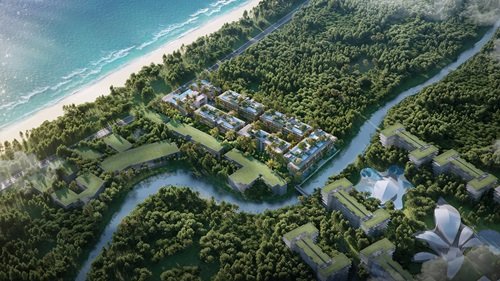
Then comes the infrastructure itself. When an owner stays on their farm over the weekend, the property today comes with far better infrastructure than it used to. Earlier, it was just land markings and may be a brick boundary. But today, developers are offering a lot more including internal roads, proper water management, plantation support, clubhouses, farm-to-table restaurants and many other resort-like amenities to make sure your weekend is relaxed and yet have access to modern lifestyle.
What’s really tipped things over, though, is that none of this upkeep falls on the owner anymore. Developers have come up with a managed model so every upkeep of the farm including watering schedules, plantation care, harvesting, general maintenance; all of it is handled by the developer’s team on the ground. So the owner isn’t signing up to be a part-time farmer. They’re signing up for weekends where they show up, enjoy the land, eat something they trust and leave without having lifted a shovel.
The truth is, wanting to be close to nature isn’t new. People have always wanted that. What kept people from acting on it wasn’t a lack of desire. It was the resistance to farmland as an idea, the distance and the sheer labour that came with maintaining a piece of land yourself. That’s the part that’s changed. Developers, today, are catering to this need of owning a land with a modern solution. So professionals seeking a closer connection with nature are finally finding it easy to act on that need, rather than just carrying it around unfulfilled.
About Author
The Author brings over two decades of experience in the real estate industry, with expertise across transactions, advisory services and ROI across commercial, industrial and residential sectors. His career spans Bengaluru, Mumbai and Australia, where he managed operations for companies including Jones Lang LaSalle, Colliers International and Embassy Group. He has worked with leading clients such as ANZ, Sony, Siemens, TATA, PWC, Vodafone and Intuit. Amit holds an MBA in Marketing and Finance from CMS Bangalore, along with qualifications in Property Valuation and the ELP Program from RICS. His experience and knowledge also drive his interest in mentoring professionals entering the real estate sector.
Amit’s journey now extends to Aranyakaa Farms, a venture shaped by the growing desire among urban residents to reconnect with nature. As Director, he oversees Business Planning, Project Planning and Execution, Sales and Operations Management, and New Business Initiatives. His philosophy of Nature, Nurture, Adventure reflects the venture’s focus on creating spaces that bring people closer to nature while offering meaningful experiences.