
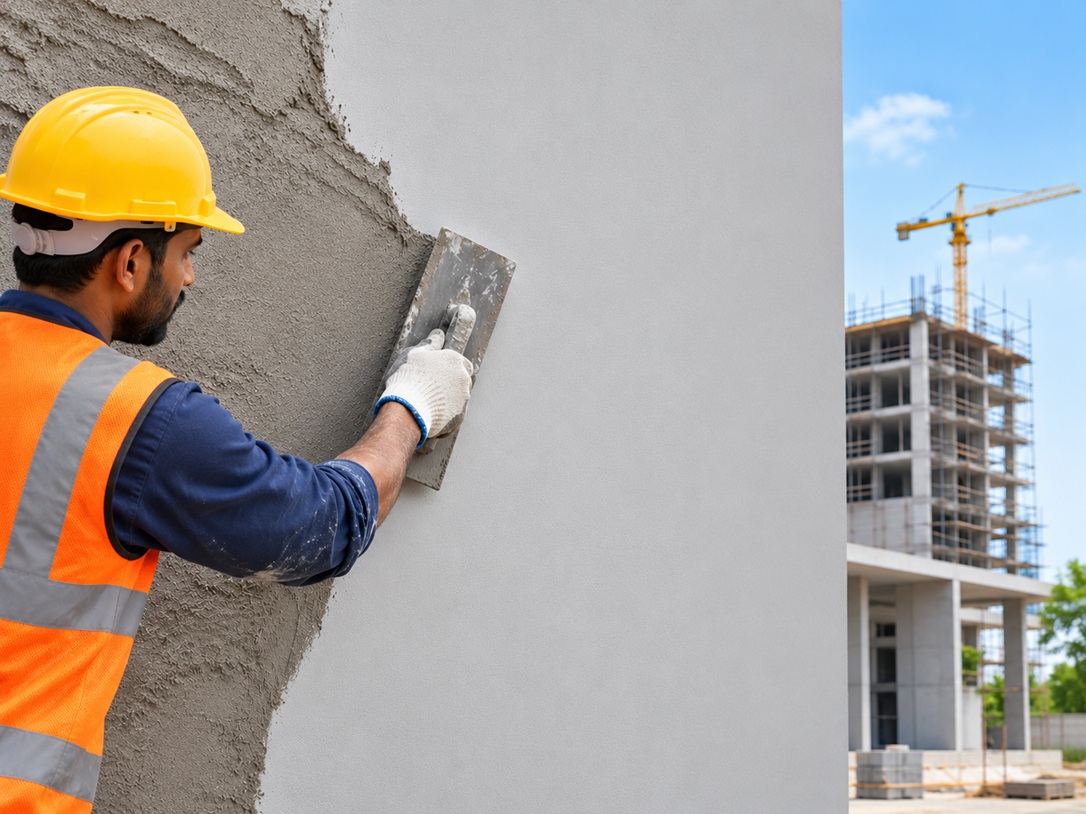
Diwali has traditionally been one of the busiest periods for home improvement in India. Homeowners use the festive season to refresh their living spaces, repair ageing surfaces and prepare their homes for celebrations. From repainting walls to upgrading interiors, renovation activity tends to increase as families look to complete improvements before the festive period begins.
However, the growing preference for time-bound renovations is changing how these projects are planned and executed. Homeowners increasingly expect quality finishes without lengthy construction schedules, while contractors must manage multiple projects within tighter timelines. This is making the speed and efficiency of wall finishing an important consideration in renovation decisions.
When Renovation Timelines Become a Challenge
Wall finishing is one of the most visible stages of interior renovation, but it can also influence the overall project schedule. Conventional sand-cement plastering involves multiple stages, including material preparation, application, curing and subsequent finishing. Depending on site conditions, workmanship and the condition of the existing surface, these activities can extend the time required before painting can begin.
During the festive season, delays at this stage can affect other activities such as electrical work, carpentry, furniture placement and final cleaning. A delay in wall preparation can therefore have a cascading impact on the entire renovation schedule.
For contractors, the challenge is to balance speed with surface quality. Completing work quickly is of little value if it results in uneven finishes, surface defects or additional repair work later.
Festive-season demand can also coincide with labour constraints, making it important to adopt materials and processes that simplify execution without compromising quality.
The Shift Towards Faster Wall-Finishing Solutions
The construction materials industry is increasingly moving towards pre-formulated and application-specific products that simplify on-site execution. Gypsum plaster is one such solution gaining relevance in interior wall finishing.
Unlike conventional sand-cement plastering, ready-to-use gypsum plaster formulations are designed to require the addition of water at the site, reducing the need for separate sourcing and proportioning of sand and cement. Their workability and levelling properties can help achieve smooth and uniform surfaces when applied correctly on suitable substrates.
Certain gypsum plaster systems can also eliminate the need for a separate POP punning stage, depending on the product and application requirements. This can reduce the number of finishing operations and help projects progress more efficiently.
Another practical advantage is that gypsum plaster does not require water curing after application. This removes the time and labour associated with curing cycles and can help subsequent finishing activities begin sooner, subject to the plaster drying adequately and site conditions.
Speed Must Go Hand in Hand with Surface Quality
Faster execution should not come at the cost of finish quality. A well-prepared wall provides the foundation for paint application and influences the final appearance of an interior space.
Consistent material formulation, appropriate application thickness, substrate preparation and skilled workmanship all contribute to the quality of the finished surface. Gypsum plaster offers good workability and levelling properties, helping applicators achieve a smooth finish suitable for subsequent decorative treatments.
Modern formulations are also designed to support adhesion, minimise shrinkage and reduce the likelihood of surface cracks when used according to recommended application practices. For renovation projects, these characteristics are particularly relevant because existing walls may have uneven areas, minor surface imperfections or different substrate conditions.
However, product selection must be based on the condition of the surface and the intended application. Areas exposed to persistent dampness or water seepage require appropriate assessment and suitable moisture-management solutions rather than relying on conventional gypsum plaster alone.
Better Planning Can Reduce Renovation Disruptions
The advantage of faster wall finishing extends beyond the application stage. A more predictable finishing process helps contractors coordinate different activities and plan labour and material requirements more effectively.
For homeowners, this can mean fewer days of disruption, better coordination with other renovation work and a more organised route towards completing the home before Diwali. For contractors, reducing unnecessary stages can improve productivity and allow resources to be deployed more efficiently across projects.
Material planning is equally important. Estimating surface areas, selecting the appropriate product, checking substrate conditions and ensuring adequate material availability before work begins can prevent avoidable interruptions. Faster materials alone cannot compensate for poor project planning. In occupied homes, shorter renovation cycles can also minimise disruption to everyday routines and make project completion more convenient for families.
Looking Beyond the Festive Deadline
The Diwali renovation rush highlights a larger shift in the construction industry. The growing adoption of engineered wall-finishing materials also reflects a broader move towards factory-controlled construction products that offer greater consistency, quality control and productivity.
Efficiency is no longer measured only by how quickly a material can be applied. It also depends on how consistently it performs, how many stages it can simplify and how effectively it fits into the overall construction process.
As homeowners become more conscious of renovation timelines and contractors face increasing expectations around productivity and finish quality, engineered wall-finishing materials are likely to play a more significant role in interior construction.
The objective should not simply be to finish walls before the festive deadline, but to achieve a durable, well-prepared surface through a process that uses time, labour and materials more efficiently. In this context, faster wall finishing is becoming more than a seasonal convenience; it is an important construction advantage.