

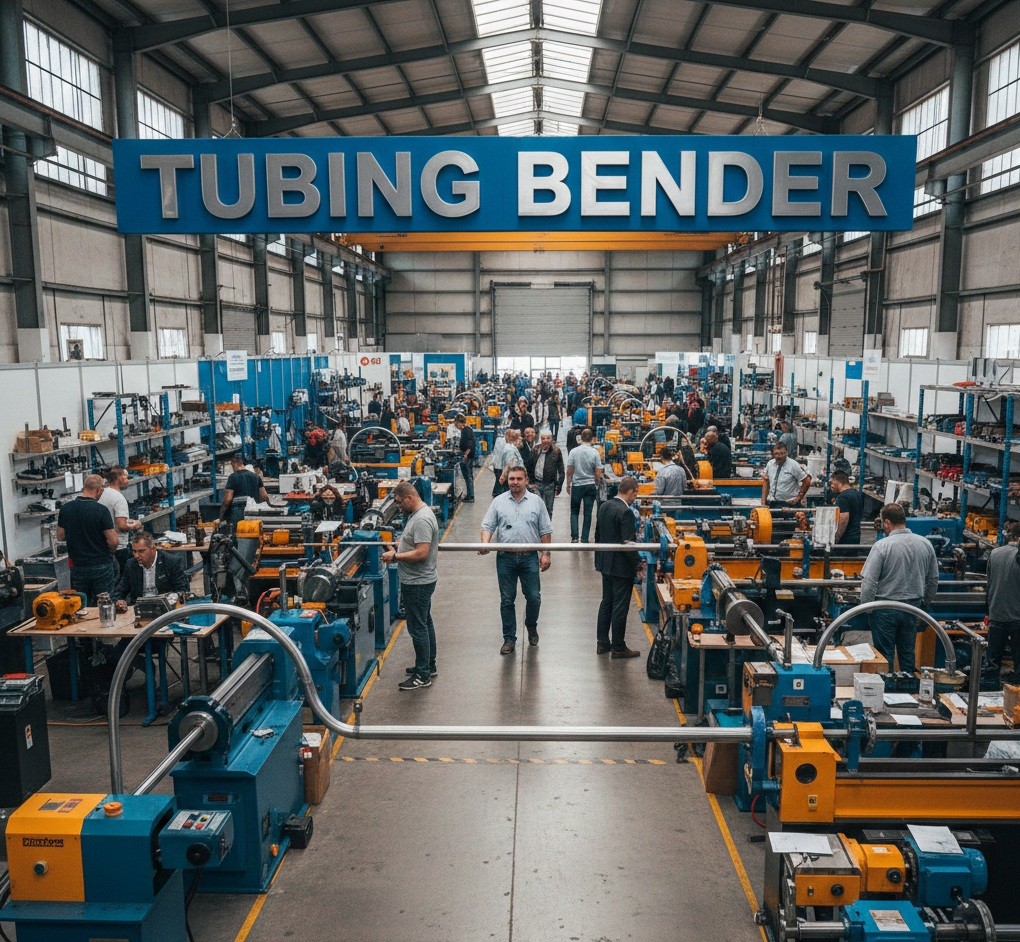
According to Research intelo, the global tubing bender market was valued at around $1.6 billion in 2024 and is expected to grow significantly – reaching $2.8 billion by 2033 with a strong CAGR of 6.2% between 2025 and 2033.This rapid market expansion is closely tied to industries shifting toward automation, advanced manufacturing, and lightweight components. From the automotive sector to aerospace and construction, companies now rely on high-quality bending solutions to make stronger, lighter, and more complex tube-based components. As the demand for customized and durable tubing rises, tubing benders are becoming essential tools for next-generation engineering.
Tubing bending plays a silent but crucial role in the way machines, vehicles, structures, and consumer products are built. Whether it’s shaping hydraulic lines or assembling roll cages, a tubing bender ensures clean, accurate bends without cracks, flattening, or distortion. This guide breaks down everything you need to know—from working principles and types of tubing benders to real-world applications, benefits, and maintenance tips.
What Is a Tubing Bender?
A tubing bender is a machine or hand tool designed to bend metal tubes into specific shapes, angles, or curves—all while retaining the tube’s round profile. Instead of joining multiple cut pieces by welding (which weakens the final product), tubing benders allow fabricators to create smooth, continuous curves.
Poor bending often leads to kinks, wrinkles, or collapse. A proper tubing bender prevents all these issues by guiding the metal fibers smoothly around a bending die. As a result, the tube maintains its shape, strength, and functionality.
Why Tubing Bending Matters
Tubes make up critical parts of vehicles, buildings, machinery, furniture, and countless industrial systems. Most of these components require customized shapes. Without a tubing bender, manufacturers would depend on inconvenient and expensive welding processes.
Why bending is important:
- Stronger assemblies – Seamless bends keep the tube structurally sound.
- Better appearance – Smooth curves enhance the overall design.
- Less waste – You avoid cutting multiple short pieces.
- Flexible customization – Makes it easy to create unique lengths and shapes.
Different Types of Tubing Benders
Each project requires a different type of bender depending on tube size, material, and workload. Broadly, tubing benders fall into manual, hydraulic, and electric/CNC categories.
1. Manual Tubing Benders
These are simple, hand-operated tools ideal for lighter materials such as copper, aluminum, and thin-walled steel. They are commonly used where portability and affordability matter.
Common Uses
- HVAC and plumbing work
- Refrigeration lines
- Home garages and workshops
- DIY projects
- Light automotive repairs
Advantages
- Compact and easy to carry
- Budget-friendly
- Great for small jobs
2. Hydraulic Tubing Benders
Hydraulic benders offer significantly more power and precision. They use hydraulic pressure to bend thicker, stronger materials that manual tools cannot handle.
Common Uses
- Automotive fabrication and roll cages
- Aerospace component shaping
- Construction and heavy machinery
- Industrial maintenance
Advantages
- High bending force
- Better consistency
- Suitable for heavy-duty materials
3. Electric & CNC Tubing Benders
These are the most advanced bending systems, powered by electric motors and computer-controlled technology. CNC benders can store multiple bending programs and repeat them with exact precision—making them ideal for mass production.
Common Uses
- Automotive OEM production
- Aerospace component manufacturing
- Industrial tube fabrication
- High-volume or custom metalworking projects
Advantages
- Exceptional accuracy
- Faster processing
- Repeatable results
- Handles complex, multi-angle bends
How Tubing Benders Work
Despite differences in power or technology, all tubing benders follow the same basic principle: the tube is clamped and pressed around a bending die.
Core Components
- Bending Die – Sets the bend radius
- Clamping Block – Holds the tube firmly
- Pressure Die – Ensures the tube doesn’t collapse
- Follower/Support – Moves along with the tube during bending
Modern electric and hydraulic machines automatically control pressure, angle, and alignment to achieve flawless bends.
Where Tubing Benders Are Used
Because tubes are everywhere, the applications are extremely diverse:
1. Automotive Industry
Used in welding-free bending of:
- Exhaust systems
- Fuel and brake lines
- Roll cages
- Chassis components
Precision is especially important in motorsports and high-performance vehicles.
2. Construction & Architecture
Tubing benders shape:
- Curved metal frames
- Support structures
- Stair railings
- Decorative frameworks
Architects frequently use bent tubing for modern designs.
3. HVAC, Refrigeration & Plumbing
Copper and aluminum tubes must often be bent into leak-proof pathways for:
- Air conditioning units
- Refrigeration coils
- Plumbing installations
4. Aerospace
The aerospace industry demands extreme accuracy, using tubing benders for:
- Hydraulic systems
- Fuel lines
- Structural assemblies
5. Furniture Manufacturing
Metal-based furniture often relies on bent tubing for both strength and aesthetics.
Benefits of Using Tubing Benders
- High Precision
Ensures consistent angles, smooth curves, and accurate repeatability. - Faster Production
Hydraulic and CNC benders dramatically speed up fabrication. - Stronger End Product
Eliminates weak points caused by welding. - Cost Savings
Less cutting, less waste, and fewer labor hours. - Multi-Material Capability
Works with steel, stainless steel, aluminum, copper, titanium, and more. - Improved Aesthetics
Clean, smooth curves elevate the overall design.
How to Choose the Right Tubing Bender
When selecting a bender, consider:
- Material Type – Hard metals require hydraulic or CNC equipment.
- Tube Diameter & Wall Thickness – Determines the bending power needed.
- Bend Radius – Tight bends require specific dies.
- Work Volume – For large batches, CNC automation is best.
- Budget – Manual benders cost less, while CNC machines are long-term investments.
Maintenance Tips to Extend Machine Life
Routine care ensures long-term performance:
- Lubricate all moving parts regularly
- Clean the dies to avoid scratching or deforming tubes
- Check hydraulic lines for leaks
- Ensure proper alignment before each operation
- Replace worn parts promptly
- Store dies carefully to prevent damage
Source: https://researchintelo.com/report/tubing-bender-market