
1. Start with the room, not the design
Size. A simple rule works well: add the room’s length and width in feet, and read the total as inches. A 14 x 16 ft hall (30 in total) suits a jhoomar about 30 inches wide. Over a dining table, the fixture is usually about half to two-thirds of the table’s width.
Height. Keep the bottom of the fixture at least 7 feet from the floor wherever people walk, and about 30 to 36 inches above a table top. A double-height hall is different: a small fixture looks lost there. Choose a longer drop, a taller piece or a cluster that fills the vertical space.
2. Choose the material for how it behaves with light
- Glass gives sparkle and reflection. Clear glass is bright and lively, while frosted or opal glass is softer.
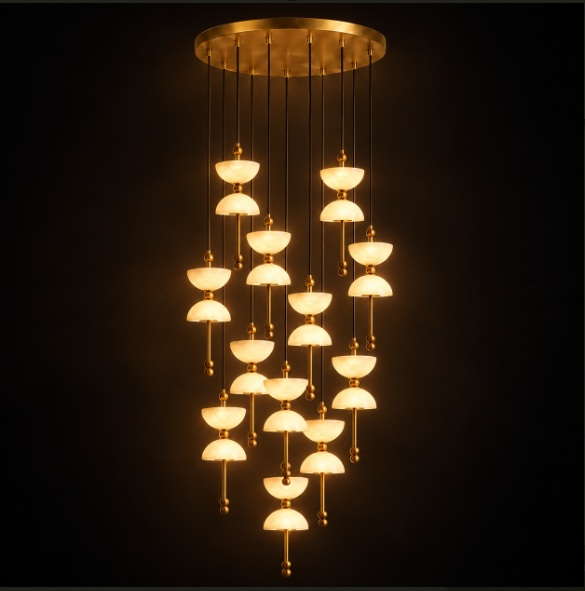
- Alabaster is a natural, translucent stone. It gives a soft, warm glow, and every piece has its own veining. It is softer than marble, so handle it with care and keep it away from water. It is a poor choice for bathrooms or open balconies.
- Marble is solid and heavier. It works well for bases, canopies and accents.
- Wood and fabric add warmth, and fabric shades spread the light evenly and reduce glare.
Natural stone varies from piece to piece. That is part of its charm, so don’t expect two to look identical.
3. Check the ceiling before you fall in love
Stone, glass and metal fixtures can be heavy. Always ask for the weight of the fixture, and make sure the hook and junction box are fixed to the concrete slab and not to a false ceiling. Builders and architects should mark these points at the wiring stage, so the ceiling is ready on the day of installation.
4. Get the light itself right
- Colour temperature: warm white (2700K to 3000K) suits halls and living rooms. Cool white feels like an office.
- Dimming: a dimmable driver lets the same hall work for a family evening and a festive gathering.
- Layers: don’t rely on one jhoomar alone. Add wall lights for the living room, a floor lamp, and staircase lights for safety and mood. Bespoke wall lights can match the jhoomar’s material and finish.
- Electrical quality: ask about the LED driver and warranty. Voltage swings are common in India, and a good driver protects the lights.
5. Ready-made or custom?
Ready-made fixtures are fine for standard rooms. For a double-height ceiling, a long staircase or an unusual layout, a custom fixture often fits better. When you speak to chandelier manufacturers in India or to custom light manufacturers, ask:
- Do you make the fixture in your own factory?
- Can you change the drop length, size, finish and bulb type?
- What is the lead time, and how is it packed for transport?
- Do you help with installation, and who looks after spares and repairs?
A quick buyer’s checklist
- Measure the room and the ceiling height first.
- Decide the hanging height and the width of the fixture.
- Pick the material for the glow you want.
- Confirm the weight and the ceiling support.
- Choose warm, dimmable light.
- Plan wall lights and staircase lights along with the jhoomar.
- Check warranty, spares and after-sales support.
About Jagmag Lights
Jagmag Lights is a designer lighting maker based in Greater Noida, making lights in its own factory since 2015. For over ten years, it has supplied designer lighting to B2B projects, and it now brings the same craft to homes. Its lights use natural, earth-born materials such as marble, alabaster, opal and travertine, along with wood and fabric, and are made by trained workers and designers. The team also guides customers on choosing and placing lights, including Vastu-friendly placement. You can explore its alabaster and bespoke lighting collection for ideas.