
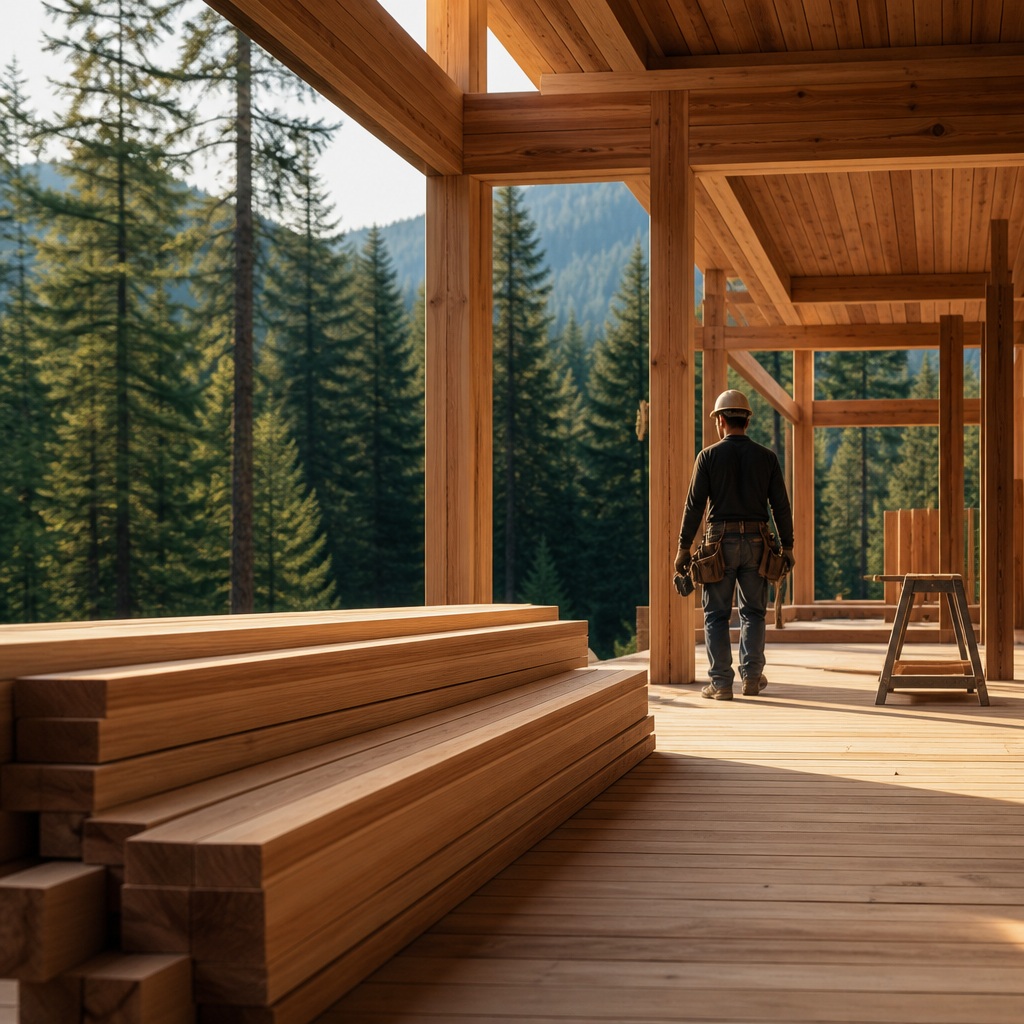
The relationship between quality lumber and lasting construction has never been more relevant than it is today. As residential and commercial developments push toward higher standards of durability, aesthetics, and sustainability, the materials chosen at the outset of any project carry enormous weight. Among all wood species used in construction and architectural finishing, cedar stands apart — not merely for its visual warmth, but for its structural resilience, natural resistance to decay, and the unmistakable character it brings to any build. Whether you are framing a custom home, cladding a commercial facade, or designing outdoor living spaces, the grade and source of your cedar will define the outcome for decades to come.
Why Cedar Remains a Builder’s First Choice
Cedar has been a cornerstone of North American construction for centuries, and its continued dominance in the lumber market is no accident. The wood’s cellular structure contains natural oils that repel moisture, insects, and fungal growth without the need for chemical treatment. This makes it an ideal choice for exterior applications where exposure to the elements is unavoidable. Unlike pressure-treated alternatives, cedar achieves its protective qualities organically, making it a preferred option for environmentally conscious builders and homeowners alike.
Beyond its functional properties, cedar offers a dimensional stability that many other softwoods cannot match. It resists warping, shrinking, and swelling even under significant temperature and humidity fluctuations — a quality that becomes especially critical in regions with harsh winters or humid summers. Builders who have worked with cedar consistently report fewer callbacks, reduced maintenance costs for clients, and a finished product that holds its integrity over time.
Grading and Selection: Getting It Right from the Start
Not all cedar is created equal, and understanding lumber grading is essential before committing to a purchase. Cedar is typically graded based on the number and size of knots, the straightness of the grain, and the overall clarity of the board. Clear grades are used for high-visibility applications such as interior paneling, cabinetry, and decorative trim, while knotty grades serve structural and rustic aesthetic purposes equally well. For those working with rough-sawn cedar, the process of evaluating and preparing boards requires additional expertise. A comprehensive guide on buying and using rough lumber effectively can help both seasoned professionals and first-time buyers make informed decisions that prevent costly mistakes down the line.
When sourcing cedar for large-scale projects, consistency across batches matters enormously. Variations in moisture content, milling precision, and species classification can create significant challenges during installation. This is why working with a reputable, specialized supplier — rather than a general-purpose lumber yard — tends to produce far superior results in both the short and long term.
Cedar in Large-Scale Residential and Commercial Development
The integration of premium wood materials into large-scale development projects has gained significant momentum in recent years. Developers are increasingly recognizing that the use of natural materials like cedar not only enhances the visual appeal of a property but also contributes to its market value and long-term desirability. Plotted developments and planned communities, in particular, benefit from the cohesive aesthetic that cedar cladding, fencing, and structural elements can provide across multiple units.
A compelling example of this trend can be seen in the rapid progress of HCBS Glenwoods, a plotted development in Jhajjar where site development is nearing completion. Projects of this scale demonstrate how thoughtful material selection from the planning phase forward can accelerate timelines, reduce rework, and deliver a finished environment that resonates with buyers and residents. When natural wood is incorporated into such developments — whether in structural framing, exterior cladding, or landscaping elements — the result is a community that feels grounded, premium, and enduring.
Sustainability and Responsible Sourcing
The conversation around sustainable construction has shifted from niche concern to mainstream expectation. Architects, developers, and end clients are all asking harder questions about where materials come from, how they are harvested, and what environmental footprint they carry. Cedar, when sourced from responsibly managed forests, is one of the most sustainable building materials available. It is renewable, biodegradable, and requires significantly less energy to process than steel, concrete, or synthetic alternatives.
Certification programs such as the Forest Stewardship Council (FSC) provide builders with a reliable framework for verifying that their cedar supply chain meets rigorous environmental and social standards. Choosing certified cedar not only supports responsible forestry practices but also positions a project favorably in markets where green building credentials carry real commercial value.
Liberty Cedar: A Trusted Name in Premium Wood Supply
When it comes to sourcing cedar with confidence, the supplier relationship is everything. Liberty Cedar has built a distinguished reputation as a premier provider of high-quality cedar and specialty wood products, serving architects, builders, and contractors across a wide range of project types. With deep expertise in wood species, grading standards, and application-specific recommendations, Liberty Cedar brings more than product to the table — they bring knowledge that helps clients make the right decisions at every stage of a project. Their commitment to quality control, consistent inventory, and responsive service makes them a go-to resource for professionals who cannot afford to compromise on materials.
Applications Across Project Types
Cedar’s versatility is one of its most underappreciated qualities. In residential construction, it appears in siding, decking, pergolas, fencing, interior wall paneling, and custom millwork. In commercial settings, cedar cladding has become a popular choice for facades that need to communicate warmth and craftsmanship without sacrificing durability. Landscape architects frequently specify cedar for raised garden beds, retaining structures, and outdoor furniture due to its natural resistance to ground contact deterioration.
The wood also performs exceptionally well in acoustic applications, making it a preferred material for music studios, performance spaces, and any environment where sound management is a priority. Its natural density and grain structure absorb and diffuse sound in ways that synthetic panels simply cannot replicate.
Making the Investment Count
Choosing cedar is ultimately a long-term investment decision. The upfront cost may exceed that of alternative materials, but the reduced maintenance requirements, extended lifespan, and enhanced property value consistently justify the premium. Builders who educate their clients on these lifecycle economics find that cedar sells itself — not as a luxury indulgence, but as a rational, evidence-based choice for anyone who plans to occupy or own a structure for more than a few years.
The key is pairing that investment with equally sound decisions about sourcing, grading, and installation. A premium material installed poorly or sourced inconsistently will underperform regardless of its inherent qualities. This is why the expertise of a knowledgeable supplier, combined with a builder’s own commitment to best practices, forms the foundation of any successful cedar project.
Conclusion
Cedar’s enduring place in construction is a testament to its unmatched combination of beauty, performance, and sustainability. As the industry continues to evolve toward higher standards and greater accountability, the materials we choose reflect the values we build with. From large-scale plotted developments to bespoke residential builds, cedar delivers a quality of outcome that few materials can rival. Working with experienced suppliers, understanding grading fundamentals, and committing to responsible sourcing are the pillars of any cedar project done right — and the results speak for themselves in structures that stand strong and look exceptional for generations.