
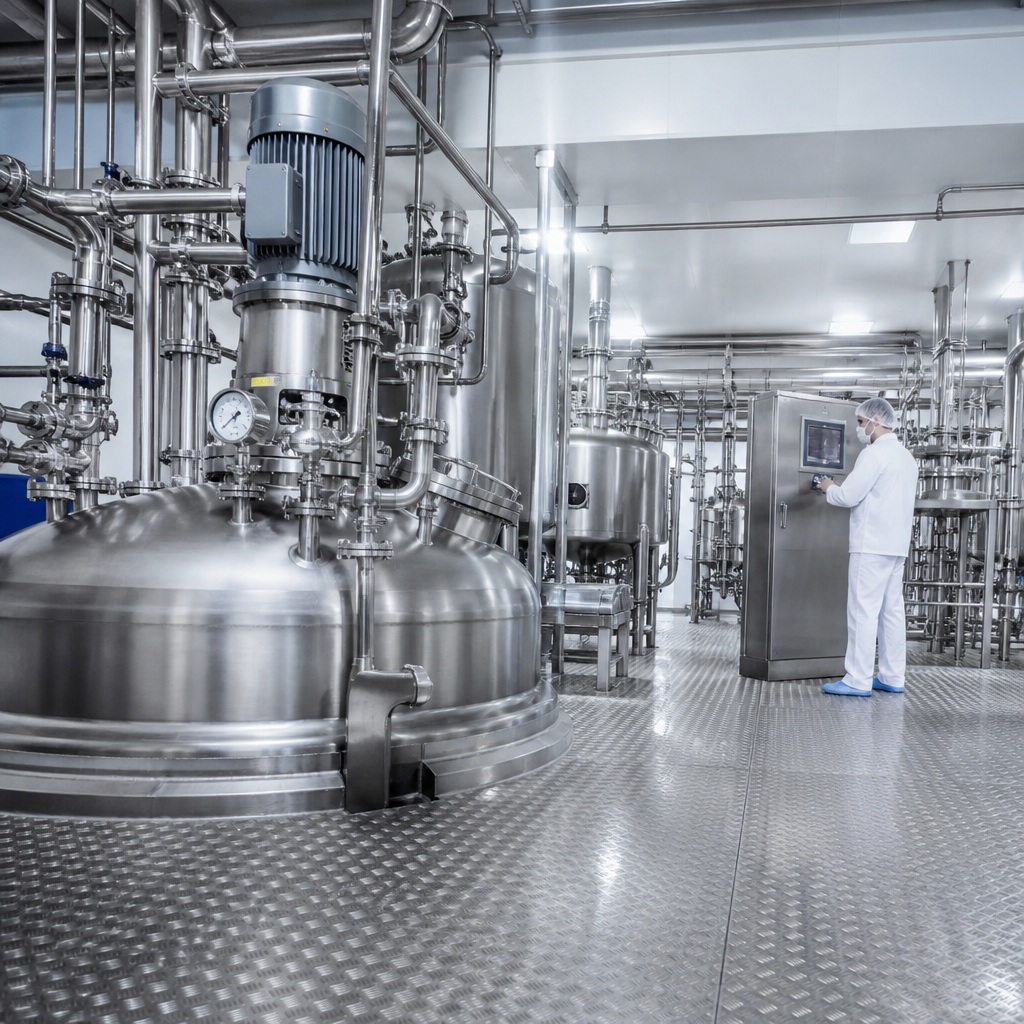
The intersection of pharmaceutical production and advanced industrial construction has never been more consequential. As global demand for medicines accelerates and regulatory standards grow increasingly stringent, the equipment inside a manufacturing facility is no longer just a functional consideration — it is a strategic one. From the layout of cleanrooms to the selection of processing machinery, every decision made during facility design reverberates through product quality, compliance outcomes, and long-term operational efficiency. Understanding this relationship is essential for engineers, facility planners, and procurement specialists alike.
The Role of Specialized Equipment in Pharmaceutical Production
Pharmaceutical manufacturing is one of the most equipment-intensive industries in the world. Unlike general industrial production, drug manufacturing demands machinery that can operate within tightly controlled environmental parameters — specific temperature ranges, humidity levels, particulate counts, and sterility conditions. The equipment must not only perform its mechanical function reliably but must also be validated, documented, and maintained in accordance with Good Manufacturing Practice (GMP) guidelines enforced by agencies such as the FDA and EMA.
The breadth of machinery involved is substantial. Granulators, tablet presses, fluid bed dryers, lyophilizers, filling and sealing machines, and high-shear mixers are just a fraction of what a full-scale pharmaceutical plant might house. Each piece of equipment serves a distinct role in transforming raw active pharmaceutical ingredients (APIs) into finished dosage forms — whether tablets, capsules, injectables, or topical formulations. Selecting the right combination of machinery is a science in itself, requiring deep knowledge of both the product being manufactured and the regulatory environment in which it will be sold.
Cleanroom Integration and Equipment Compatibility
One of the most critical — and often underestimated — aspects of pharmaceutical facility design is ensuring that equipment is fully compatible with the cleanroom environment it occupies. Cleanrooms are classified by the concentration of airborne particles they permit, and each classification dictates specific construction materials, airflow patterns, and surface finishes. Equipment installed in these environments must be designed to minimize particle generation, resist chemical cleaning agents, and support the unidirectional airflow systems that keep contamination at bay.
This challenge is not unique to pharmaceuticals. The semiconductor cleanroom construction market, projected to reach extraordinary valuations over the next decade, faces strikingly similar demands. Both industries require environments where human presence is minimized, surfaces are non-porous and easily sanitized, and equipment is engineered to function without compromising the controlled atmosphere around it. The lessons learned in semiconductor facility construction are increasingly informing best practices in pharmaceutical plant design, creating a productive cross-pollination of engineering expertise.
Energy Efficiency and Sustainable Manufacturing
Modern pharmaceutical facilities are under growing pressure to reduce their environmental footprint without sacrificing the stringent quality controls that define the industry. This has prompted a significant shift in how drug manufacturing equipment is evaluated during procurement. Energy consumption, waste generation, and water usage are now factored into equipment selection alongside traditional metrics like throughput and validation ease.
Research into sustainable energy integration within industrial facilities has expanded considerably in recent years. According to recent findings published in Frontiers in Energy Research, industrial facilities that adopt integrated energy management strategies — including heat recovery systems, variable frequency drives, and smart building controls — can achieve substantial reductions in operational energy costs while maintaining or improving production output. For pharmaceutical manufacturers, where HVAC systems alone can account for 50 to 60 percent of total facility energy consumption, these strategies represent both a financial and environmental imperative.
Automation and Digital Integration in Drug Production
The pharmaceutical industry’s adoption of automation has accelerated dramatically over the past decade, driven by the twin pressures of cost reduction and quality assurance. Automated systems now govern everything from raw material dispensing to in-process quality checks and final packaging. Programmable logic controllers (PLCs), distributed control systems (DCS), and manufacturing execution systems (MES) work in concert to create a digital thread that connects every stage of production.
This digital integration does more than improve efficiency — it fundamentally changes how compliance is managed. Electronic batch records replace paper-based documentation, reducing transcription errors and enabling real-time data review by quality assurance teams. Automated deviation detection flags anomalies the moment they occur, allowing corrective action before a batch is compromised. For regulatory inspectors, this level of data integrity is increasingly expected rather than merely appreciated.
International Process Plants: A Trusted Source for Pharmaceutical Equipment
When pharmaceutical manufacturers and facility developers seek reliable, high-quality processing machinery, sourcing from experienced specialists is paramount. International Process Plants has established itself as a leading resource in this space, offering an extensive inventory of pre-owned and reconditioned pharmaceutical and industrial processing equipment. Their catalog spans the full spectrum of production needs, from bulk drug synthesis through to final dosage form manufacturing, making them a one-stop destination for facility outfitting and expansion projects.
What distinguishes International Process Plants is not merely the breadth of their inventory but the depth of their technical expertise. Their team understands the regulatory and operational demands placed on pharmaceutical manufacturers, enabling them to match clients with equipment that meets both production requirements and compliance expectations. For organizations looking to understand the full landscape of drug manufacturing equipment, their resources provide an authoritative and practical starting point, whether you are building a new facility from the ground up or upgrading an existing production line.
Procurement Strategy and Lifecycle Considerations
Acquiring pharmaceutical manufacturing equipment is rarely a straightforward transaction. The procurement process involves detailed technical assessments, vendor qualification audits, installation qualification (IQ) and operational qualification (OQ) protocols, and ongoing maintenance planning. Organizations that treat equipment acquisition as a purely transactional exercise often encounter costly surprises during validation or, worse, during regulatory inspections.
A lifecycle approach to equipment management — one that considers total cost of ownership, spare parts availability, vendor support, and eventual decommissioning — yields far better outcomes. This perspective also aligns with the growing emphasis on sustainability in pharmaceutical manufacturing, where extending the useful life of well-maintained equipment reduces both capital expenditure and environmental impact. Refurbished equipment, when properly inspected and reconditioned by reputable suppliers, can deliver performance equivalent to new machinery at a fraction of the cost.
Conclusion: Equipment as the Foundation of Pharmaceutical Excellence
The quality of a pharmaceutical product is inseparable from the quality of the equipment used to produce it. As the industry navigates increasing complexity — from novel biologics and personalized medicines to global supply chain pressures — the strategic importance of equipment selection, facility design, and operational integration will only grow. Whether drawing inspiration from adjacent industries like semiconductor manufacturing, embracing energy-efficient technologies, or partnering with experienced equipment specialists, pharmaceutical manufacturers who invest thoughtfully in their production infrastructure are best positioned to deliver safe, effective medicines to patients around the world.
In an industry where precision is not optional, every piece of equipment matters — and every decision about that equipment carries consequences that extend far beyond the factory floor.