
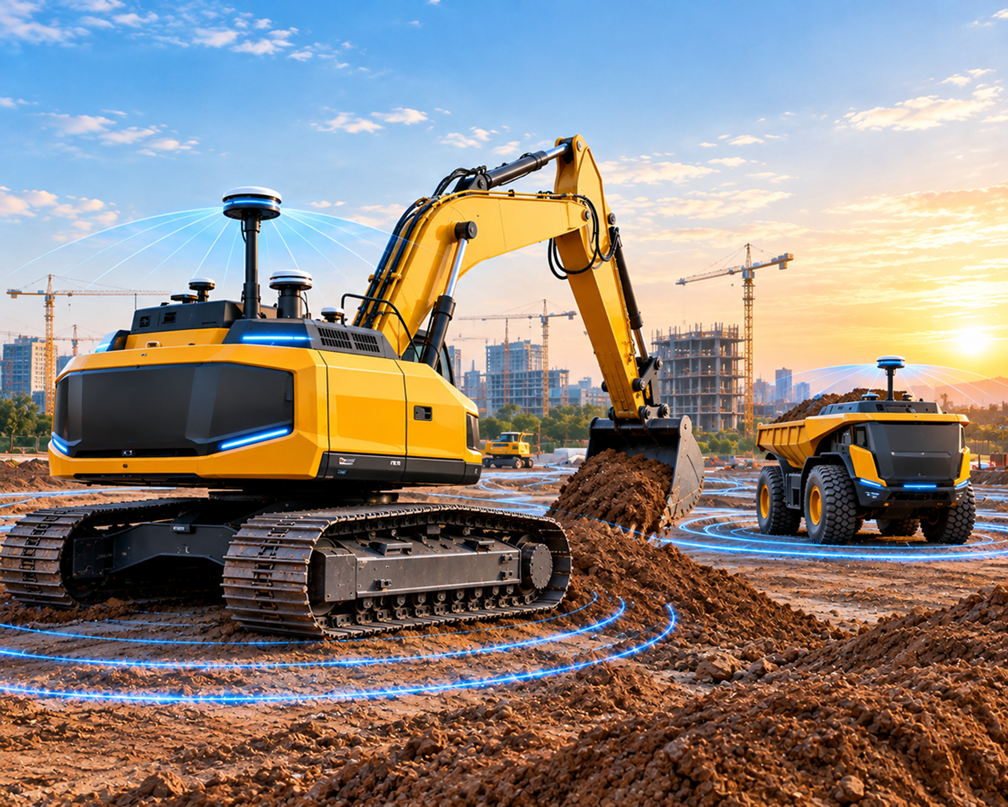
According to latest research by Growth Market Reports, the autonomous construction equipment market size reached USD 19.2 billion in 2025, driven by a robust adoption of automation technologies and digital transformation across the construction industry. The market is poised for impressive growth, anticipated to expand at a CAGR of 21.4% from 2026 to 2034. By the end of 2034, the autonomous construction equipment market is forecasted to attain a value of USD 147.3 billion, reflecting the increasing demand for productivity, safety, and efficiency on construction sites worldwide. This growth trajectory is underpinned by rapid technological advancements, rising labor costs, and a global push towards sustainable and smart infrastructure development.
The autonomous construction equipment market is gaining momentum as the construction industry embraces automation, digital technologies, and intelligent machinery. Autonomous equipment uses advanced sensors, artificial intelligence (AI), machine learning, GPS, and control systems to perform construction activities with limited or no direct human intervention. These technologies are transforming traditional construction sites by improving operational efficiency, supporting worker safety, and enabling more precise project execution.
Key Drivers
Rising Demand for Construction Automation
Construction companies are increasingly adopting autonomous machinery to streamline repetitive and labor-intensive tasks. Automated excavators, bulldozers, loaders, and grading equipment can execute programmed operations with consistent precision. These capabilities help contractors manage complex projects, reduce operational delays, and improve equipment utilization. As construction schedules become more demanding, automation is emerging as an important tool for maintaining productivity across residential, commercial, and infrastructure developments.
Labor Shortages and Workplace Safety
A shortage of skilled construction workers is encouraging companies to explore machinery capable of operating with reduced human involvement. Autonomous equipment can support activities in hazardous environments, including excavation zones, demolition sites, and large-scale earthmoving operations. By limiting direct worker exposure to dangerous tasks, these systems can contribute to safer working conditions while helping contractors address workforce constraints and maintain project continuity.
Major Challenges
High Initial Investment and Integration Costs
The adoption of autonomous construction equipment often requires substantial upfront expenditure. Advanced sensors, computing systems, connectivity infrastructure, software integration, and specialized maintenance can increase the total cost of ownership. Smaller contractors may find these expenses difficult to justify, particularly when project volumes are inconsistent. Demonstrating long-term operational savings and offering flexible financing models will be important for broader market adoption.
Technical and Regulatory Barriers
Autonomous machinery must operate reliably across changing weather conditions, uneven terrain, dust, vibration, and congested construction environments. Sensor accuracy and system reliability are essential for preventing equipment collisions and operational errors. In addition, differing safety requirements, liability considerations, and regulations across regions can complicate deployment. Manufacturers must continue improving system resilience while supporting compliance with applicable construction and machinery standards.
Emerging Opportunities
Smart Construction Sites and Connected Machinery
The integration of autonomous equipment with digital construction platforms creates opportunities for more coordinated project management. Connected machinery can exchange operational information with fleet management software, site monitoring systems, and building information modeling platforms. This integration enables contractors to monitor equipment performance, allocate resources efficiently, and identify potential scheduling conflicts before they disrupt project progress.
Infrastructure Development and Equipment Modernization
Investment in roads, bridges, railways, renewable energy installations, and urban infrastructure is expanding the potential application base for autonomous machinery. Contractors undertaking large-scale projects can benefit from automated earthmoving, material handling, and site preparation. Equipment manufacturers also have opportunities to upgrade existing machines with autonomous features, making automation accessible to operators that cannot immediately replace entire fleets.
Technological Advancements
Artificial Intelligence and Precision Navigation
AI-powered perception systems allow autonomous equipment to identify obstacles, interpret surroundings, and adjust operations according to site conditions. Improvements in satellite positioning, computer vision, radar, and lidar are supporting more accurate navigation and task execution. These technologies can also facilitate coordinated operations between multiple machines, reducing unnecessary movement and improving workflow consistency.
Remote Monitoring and Predictive Maintenance
Cloud-connected monitoring systems enable construction managers to assess equipment utilization, operating conditions, and maintenance requirements remotely. Predictive maintenance tools analyze machine data to identify potential faults before equipment failure occurs. This approach can reduce unplanned downtime, improve asset availability, and support more efficient maintenance planning throughout the equipment lifecycle.
Competitive Landscape
Caterpillar Inc.
Komatsu Ltd.
Volvo Construction Equipment
Hitachi Construction Machinery Co., Ltd.
Liebherr Group
CNH Industrial N.V.
Hyundai Construction Equipment Co., Ltd.
JCB Ltd.
SANY Group
XCMG Group
Future Outlook
The autonomous construction equipment market is expected to evolve as technological innovation, infrastructure development, and digital construction practices converge. Greater affordability, improved system reliability, and stronger integration with connected construction platforms could accelerate adoption across different contractor categories.
While investment requirements and regulatory complexities remain important considerations, continued advancements in AI, robotics, and machine connectivity are likely to expand the role of autonomous machinery in modern construction. Companies that prioritize practical deployment, operator training, safety, and measurable productivity improvements will be better positioned to benefit from the market’s long-term development.
Source: https://growthmarketreports.com/report/autonomous-construction-equipment-market